Arborist Consultation in Westchester, FL
The yards behind Westchester's 1950s and 1960s ranch homes are full of mature trees: black olives, mahoganies, live oaks, mangos and avocados, plus palms of every kind. Many have survived Andrew and Irma. Some came through stronger, others are carrying damage that never healed right. Our arborist consultations in Westchester, FL give you an honest read on those trees before hurricane season, before a sale, or before you decide to remove one.
Why people here ask for a consultation
A consultation is a visit focused on understanding the tree, not cutting it. Westchester homeowners call us for many reasons. An avocado tree is wilting branch by branch. A palm has turned bronze from the bottom up. A ficus hedge has gone thin and sticky. Roots from a black olive are lifting the patio. Insurance or a buyer's inspection flagged a tree near the roof. Or hurricane season is coming and you want to know which trees could become a problem.
What we look at
We look at the full tree and the ground it is growing in. In South Florida that ground is often just a thin layer of soil over oolitic limestone, which limits how deep roots can grow. Trees here tend to spread their roots wide and shallow, so we pay close attention to what has happened around the base: trenching for pipes, new pavers, pool decks, raised beds and drainage changes. We also check the trunk, the main branch unions, the crown balance, and any old storm wounds or cavities. Then we explain what we found and give you written recommendations.
Problems we see often in Westchester
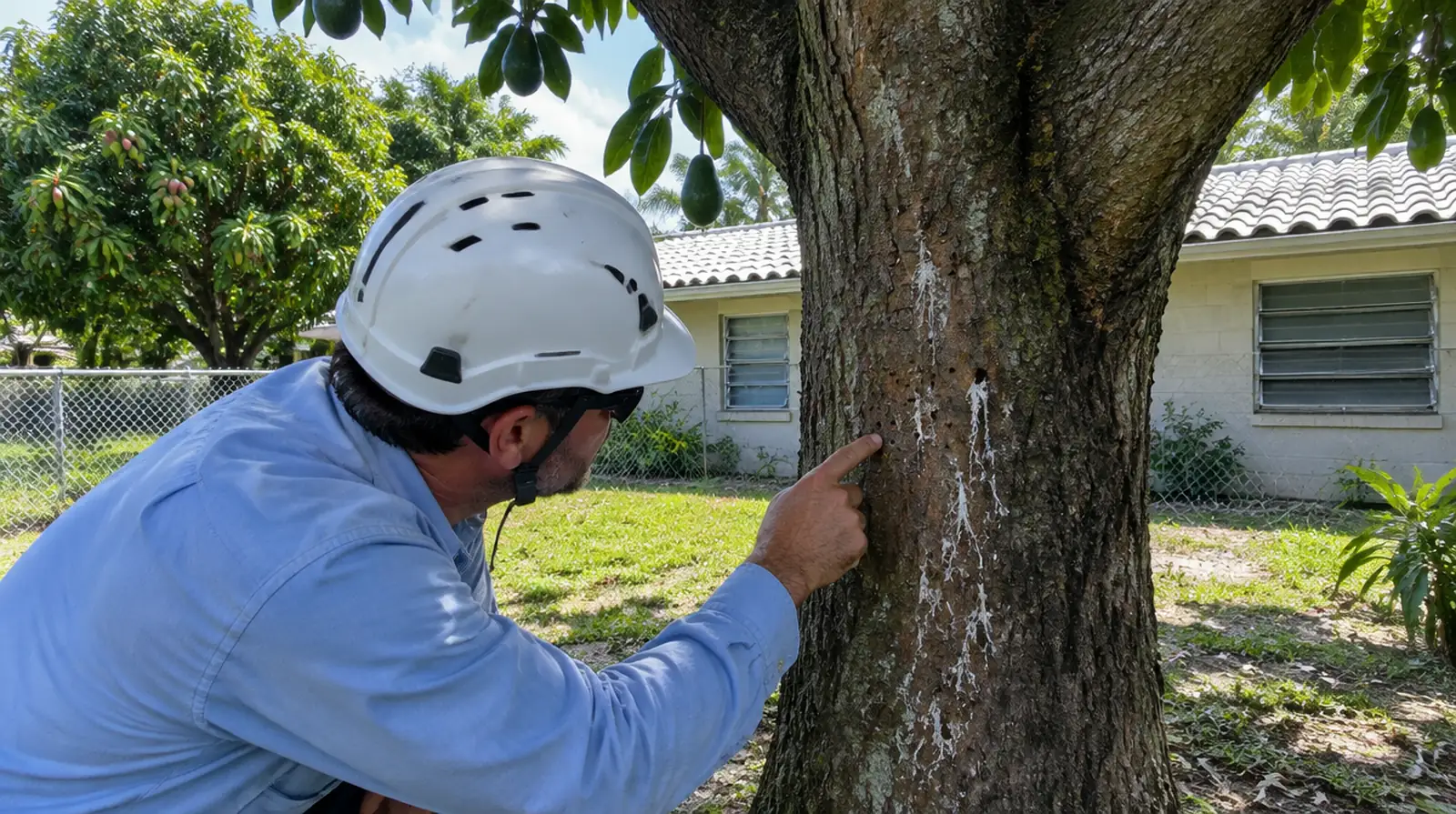
Laurel wilt on avocados. This disease is spread by the redbay ambrosia beetle and has been in Miami-Dade since 2011, killing a large number of avocado trees in the county's groves and backyards. Signs include wilting sections of canopy, dead leaves that stay attached, and small holes with toothpick-like strands of sawdust on the trunk. Infected wood should be handled carefully so the beetle does not spread to other trees.
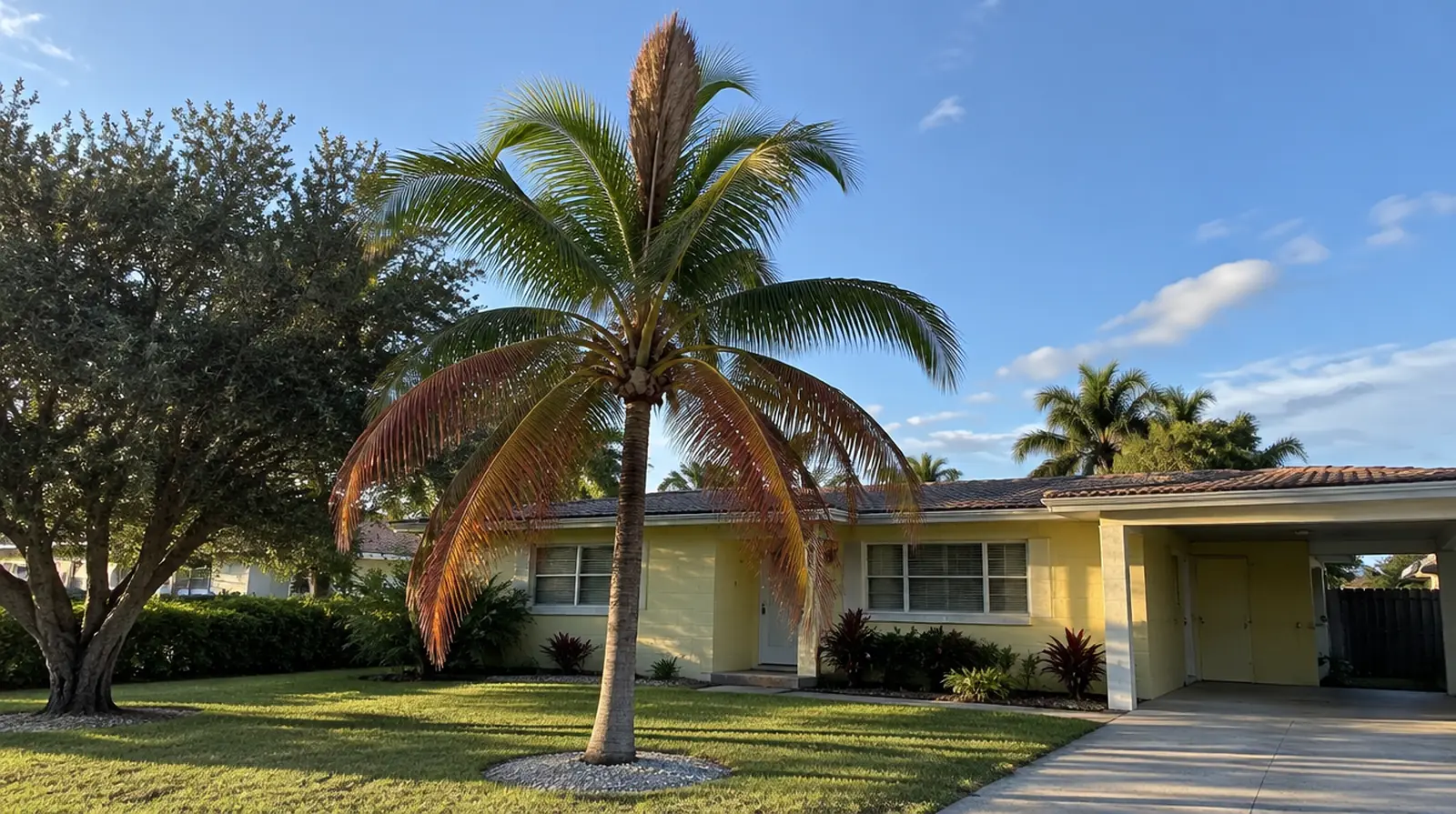
Lethal bronzing on palms. This bacterial disease, spread by a small insect, kills coconut palms, Canary Island dates, cabbage palms and others. The lower fronds turn bronze or reddish, then the spear leaf dies. Once the spear leaf goes, the palm cannot recover. Early checks matter for the palms next to it.
Ficus problems. Ficus hedges and trees suffer from whitefly and from root systems that crack driveways, walls and pipes. Large ficus near a house deserves an honest look at whether it fits the space.
Hurricane structure. Black olives, mahoganies and live oaks can handle storms well when the crown is balanced and open. Trees that were topped, over-thinned or hurt in past hurricanes often have weak regrowth that tears off in high wind. We point out which limbs pose the most risk and which trees are most likely to fail.
Miami-Dade tree permits
Westchester is in unincorporated Miami-Dade County, so county tree rules apply. In general, removing a tree requires a county permit unless an exemption applies. Common exemptions include certain invasive species and non-specimen trees, meaning trees under 18 inches in diameter, in the yard of an existing single-family home. Larger specimen trees come with more protection. Rules change, so confirm with the county before any removal. We can help you measure trees and identify species so you know what to ask.
After the consultation
You might only need to adjust watering or move mulch off the trunk. Or the next step might be pre-season tree trimming to open a dense crown, palm trimming to clear dead fronds and seed pods, or tree removal when a tree cannot be saved. Our recommendations stand on their own, so you are free to use them however you like.
We work across Westchester and nearby Olympia Heights, Westwood Lakes, Coral Terrace, Coral Gables, Sweetwater and the area around Tropical Park and FIU.
Questions
Should I trim before hurricane season?
Yes, and earlier is better. Light, correct pruning in spring or early summer lowers wind load. Heavy cutting right before a storm can make things worse.
My avocado has holes in the trunk. Is it done?
Not always. Several insects bore into trees here. We check the signs and tell you what we see.
Get your trees checked
Call (786) 431-0807 to schedule a visit. Before and early in hurricane season is the busiest time, so earlier is better.